
What Is a Double Door Container?
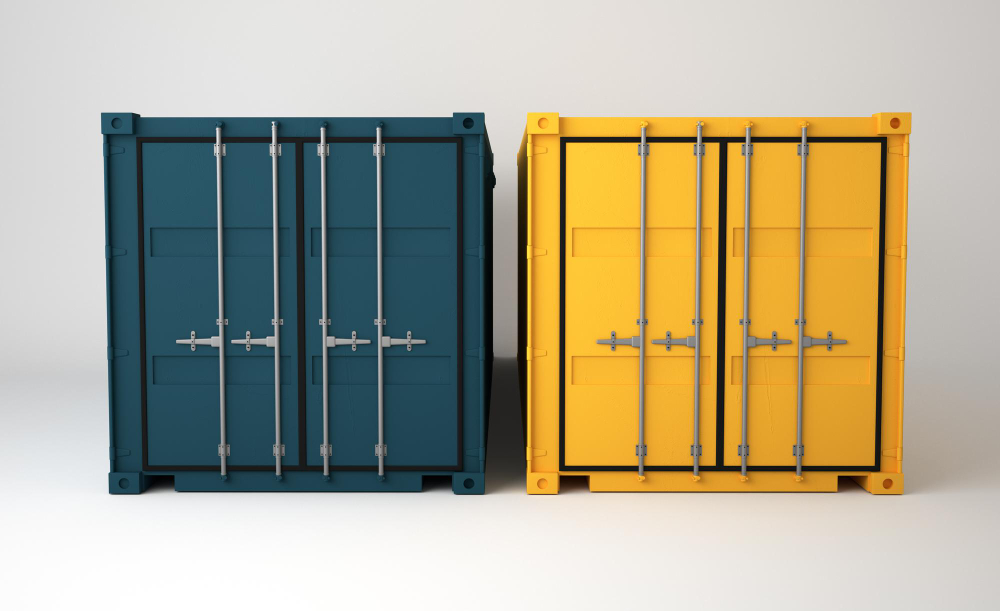
A double door container – also known as a tunnel container, tunnel-tainer, or double-ended container – is a shipping container with full-size cargo doors on both short ends, rather than just one end like a standard shipping container.
When both sets of doors are opened simultaneously, the container creates a clear pass-through tunnel from one end to the other. This is where the name “tunnel container” comes from.
Double door containers are built to the same ISO standards as conventional shipping containers, meaning they are fully compatible with standard ships, trucks, trains, cranes, and port infrastructure. The key difference is purely in accessibility – having two entry points instead of one fundamentally changes how the container can be loaded, unloaded, and used.
Infinex supplies a range of container types in Singapore, including specialised units. Browse our products or contact us for availability.
Double Door vs Standard Container: Key Differences
| Feature | Double Door Container | Standard Container |
| Door Configuration | Doors on both ends | Doors on one end only |
| Loading Access | Two entry/exit points | Single entry/exit point |
| Pass-Through Access | Yes (tunnel design) | No |
| Loading Efficiency | Faster – load one end, unload the other | Slower – LIFO unless fully unpacked |
| Cargo Proximity | Within 10 to 20 ft of any item | Up to 40 ft from items at the back |
| Forklift/Pallet Access | From both ends | From one end only |
| FIFO Inventory | Naturally supported | Requires complete unloading |
| Cost | Higher upfront | Lower upfront |
| Availability | Less common; often new/one-trip only | Widely available in all conditions |
| Structural Integrity | Requires reinforced frame | Standard frame |
Benefits and Advantages of Double Door Containers
1. Dual Access and Pass-Through Efficiency
The defining advantage. Being able to access cargo from either end eliminates the need to unpack an entire container to reach items at the back. Workers can load from one side and unload from the other simultaneously, dramatically reducing handling time.
With a double door container, you are always within 10 to 20 feet of any item (depending on container length), compared to potentially 40 feet with a standard single-door unit.
2. Faster Loading and Unloading
Dual access points mean forklifts and pallet jacks can work from both ends at the same time. This reduces idle time, cuts labour costs, and speeds up turnaround – particularly valuable at busy ports and construction sites where time is money.
3. FIFO Inventory Management
Double door containers naturally support First-In, First-Out (FIFO) inventory systems. Goods loaded first through one end can be unloaded first from the other end, without disturbing the rest of the cargo. This is critical for time-sensitive materials and high-turnover operations.
4. Improved Organisation and Zoning
The pass-through design allows you to partition a container into two separate storage zones, each accessible from its own end. A 20ft container becomes two 10ft zones; a 40ft becomes two 20ft zones. This is ideal for storing different cargo types or assigning separate areas to different teams or clients.
5. Enhanced Safety
Clear entry and exit points from both ends reduce congestion, prevent workers from crossing paths, and create defined workflow patterns. Workers can enter and exit without twisting their bodies while carrying heavy items, reducing injury risk.
6. Reduced Cargo Damage
Straight-through movement eliminates the need to drag, reposition, or manoeuvre items around other cargo. Less handling means less risk of scratching, denting, or dropping goods.
7. Better Ventilation
With doors at both ends, double door containers benefit from improved natural airflow when both ends are open, which is beneficial for temperature-sensitive or moisture-producing cargo.
8. Versatility
A double door container can always function as a standard container – simply close one set of doors and use it conventionally. But a standard container can never provide dual access. This makes double door containers inherently more future-proof and adaptable.
9. Cost-Effective for Conversions
For container conversion projects, double door containers are often preferred because removing or modifying existing doors is less invasive than cutting new openings into solid steel walls. The tunnel design also lends itself to walk-through retail spaces, exhibition corridors, and connected modular buildings.
Disadvantages and Considerations
Higher Upfront Cost
Double door containers typically cost more than standard units. Most are available only in new or one-trip condition, which commands a premium. A new 20ft double door starts from approximately US$3,250 to 4,825, while a 40ft HC can reach US$9,790 or more depending on location.
Limited Used Market
Because double door containers represent a smaller share of the global fleet, finding quality used units at competitive prices can be challenging.
Double the Maintenance
Two sets of doors means twice the sealing responsibility. Door gaskets, hinges, lock rods, and rubber seals at both ends need regular inspection and maintenance. On used units, door wear is a common concern – misaligned doors are a red flag, not a minor issue.
Ground Conditions Matter
Double door containers are typically accessed from both ends, which means both approaches need solid, level ground. Muddy, swampy, or uneven ground can cause the container to sink, potentially jamming doors and making them impossible to open.
Structural Considerations
The removal of a solid wall at the second end requires careful engineering to maintain structural integrity. A well-built double door container from a reputable manufacturer is just as strong as a standard container. However, poorly built units may be weaker – always buy from trusted suppliers.
Common Uses and Applications
Shipping and Logistics
- FIFO warehousing – high-turnover distribution centres
- Drive-through cargo access – palletised goods flow straight through
- Dual-shipper sharing – two companies partition one container, each accessing their end
- Temporary warehouse corridors – connected containers form covered walkways
Construction Sites
- Makeshift tunnels and covered walkways for pedestrian safety
- On-site tool and material storage with access from either side
- Storage of long materials (pipes, lumber, steel beams) that can slide through
Need containers for your construction project? Explore Infinex’s services for delivery and setup.
Vehicle and Equipment Storage
- Cars, motorbikes, snowmobiles, boats
- Tractors, excavators, forklifts
- Drive in from one end, drive out from the other
Retail, Events, and Hospitality
- Walk-through retail experiences and pop-up shops
- Exhibition tunnels and display corridors
- Pop-up bars, cafes, and food stalls
- Crowd-controlled event venues
Agriculture
- Harvest storage with pest and rodent protection
- Better airflow for agricultural produce
- Drive-through loading for farm vehicles
Residential and Commercial Conversions
- Container homes with natural flow-through design
- Mobile classrooms and training facilities
- Container offices and workshops
- Document and seasonal storage
Infinex designs and builds customised container solutions for offices, workshops, retail, and more. Speak to our team about your project.
Common Misconceptions About Double Door Containers
“Double door containers are structurally weaker”
False. A quality double door container from a reputable manufacturer is engineered with reinforced framing to fully compensate for the second door opening. They meet the same ISO standards as single-door units.
“They’re only useful for transport”
False. Double door containers excel in static storage, retail conversions, construction site applications, and architectural projects. The dual-access design often makes them more useful than standard containers for non-shipping applications.
“They’re too expensive to justify”
Not necessarily. The ROI shows up quickly if your operations benefit from dual-access flow. Reduced labour time, faster loading/unloading, and improved inventory management can offset the higher purchase price within months.
Frequently Asked Questions
What is the difference between a double door and a tunnel container?
They are the same thing. “Double door container” and “tunnel container” (or “tunnel-tainer”) are interchangeable terms for a container with full-size cargo doors at both ends.
What sizes are double door containers available in?
The most common sizes are 20ft standard, 20ft high cube, 40ft standard, and 40ft high cube. Non-standard sizes (10ft, 15ft, 24ft, 30ft, 45ft) are available but less common and more expensive.
How much can you fit in a 40ft double door container?
Approximately 2,390 cu ft (67.4 m3) of volume for a standard 40ft, or 2,694 cu ft (76.3 m3) for a 40ft high cube. In practical terms: 470 boxes, 30 European pallets, or the contents of four 2-bedroom homes.
Are double door containers secure?
Yes. Each end features heavy-duty lockboxes, 2 to 3 locking bars per door, and robust steel construction. Some units include patented tri-cam security devices. You can also add high-security HASP locks.
Can double door containers be modified like regular containers?
Absolutely. They can be converted into offices, retail spaces, workshops, homes, and virtually anything a standard container can become – with the added benefit of dual access points.
How much does a double door container cost?
Prices vary by size, condition, and location. Approximate ranges:
- 20ft new/one-trip: US$3,250 to 4,825
- 40ft new: US$7,200+
- 40ft HC new: US$9,790+
Used containers, when available, typically cost approximately half the price of one-trip units.
Do I need to plan the door direction before delivery?
Yes. Unlike a standard container where you only consider one end, a double door container requires planning for both door-facing directions based on your site layout and intended workflow.