
Choosing the right type of shipping container protects your cargo and controls your cost. This guide covers the container types in everyday use, from the standard dry box to reefer, flat rack, tank and swap body units, with the ISO code for each, a comparison table and a simple matrix to help you pick.
How shipping containers are classified
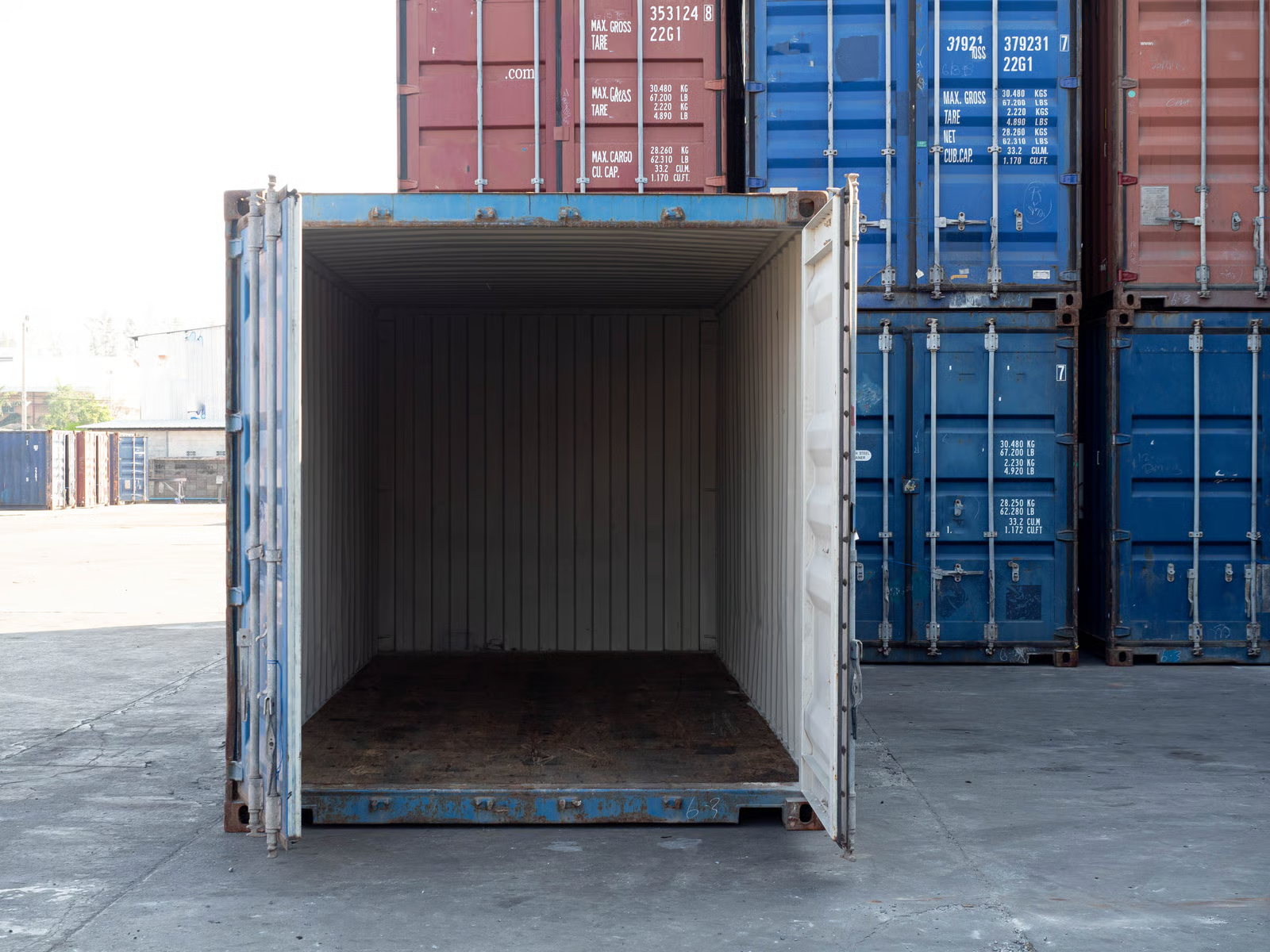
Every ISO container carries a four-character size-type code, for example 22G1. The first two characters give the size (length and height); the last two give the type. The type letter is the quick tell: G for general purpose, R for reefer, T for tank, U for open top, P for platform and flat rack. You will see these letters against each type below.
When you choose a container, three things about the cargo decide the type:
- Weight and density: heavy, dense loads point to a 20ft or a half-height unit; light, bulky loads point to a High Cube.
- Form: solid, liquid or gas. Liquids and gases go in tanks; loose bulk goes in bulk or half-height units.
- Temperature: perishable or temperature-sensitive cargo needs a reefer or an insulated container.
Shipping container types: quick comparison
|
Container type |
ISO code |
Common sizes |
Best for |
|
Dry / General Purpose |
G |
20ft, 40ft |
General dry cargo, storage |
|
High Cube |
G |
40ft, 45ft |
Bulky, lightweight goods |
|
Reefer (refrigerated) |
R |
20ft, 40ft HC |
Chilled and frozen cargo |
|
Open Top |
U |
20ft, 40ft |
Tall or over-height cargo |
|
Flat Rack |
P |
20ft, 40ft |
Machinery, vehicles, pipes |
|
Open Side |
U |
20ft, 40ft |
Long items, side access |
|
Double Door (tunnel) |
G |
20ft, 40ft |
FIFO loading, fast turnaround |
|
ISO Tank |
T |
20ft frame |
Liquids, gases, chemicals |
|
Half-Height |
U |
20ft |
Dense bulk (ore, stone) |
|
Insulated / Ventilated |
H / V |
20ft, 40ft |
Condensation-sensitive goods |
|
Swap Body |
– |
Road/rail |
European road and rail transfer |
Standard container types
1. Dry Container (General Purpose), code G. The workhorse of global trade and, on Singapore haulage data from Haulio, around 62 percent of container moves. A fully enclosed steel box with doors at one end, it suits almost any palletised or boxed dry cargo and doubles as storage. We stock these as ISO standard containers.
2. High Cube Container, code G. One foot taller (9ft 6in vs 8ft 6in), adding about 305 mm of internal height. A 40ft HC offers roughly 76 m3 against 68 m3 for a standard 40ft, ideal for light, voluminous cargo.
3. Refrigerated Container (Reefer), code R. An insulated, powered box holding a set temperature for food, pharmaceuticals and flowers. See our reefer containers.
4. Open Top Container, code U. A dry box with a removable tarpaulin or hard top, for crane loading of over-height cargo. Among our special containers; detail in the open top container guide.
5. Flat Rack Container, code P. No sides or roof, just a strong base with fixed or collapsible end walls. Ideal for vehicles, pipes, boats and heavy machinery, with 40ft units rated up to about 45 tonnes.
6. Open Side Container, code U. Doors that open along the full length of one side, for long items and awkward access. See the open side container guide.
7. Double Door (Tunnel) Container, code G. Doors at both ends create a drive-through tunnel for fast first-in-first-out loading, common for steel and iron. More in the double door container guide.
8. ISO Tank Container, code T. A cylindrical stainless steel tank in an ISO frame for liquids, gases and chemicals. For safe transit a tank must be filled to between 80 and 95 percent, so the liquid neither surges nor has no room to expand. Ask our customised solutions team about tank availability.
Special and purpose-built types
9. Hard Top Container, code U. Like an open top but with a detachable rigid steel roof, combining crane top-loading with a secure solid lid.
10. Ventilated Container, code V. Passive vents allow airflow to prevent condensation, suited to coffee, cocoa and moisture-sensitive cargo.
11. Insulated Container, code H. Thermal insulation, sometimes with a compressor unit, holding a stable temperature for pharmaceuticals, food and biologicals on shorter trips.
12. Half-Height Container, code U. Around 1.3 m tall, built for very dense bulk such as ore, coal and stone, popular in mining.
13. Garment-on-Hanger (GOH). Internal hanging rails to ship 8,000 to 12,000 garments per 40ft unit without folding.
14. Bulk Container, code B. Top hatches for loading and a discharge gate for granular materials like grain, resin and powders.
15. Swap Body Container. An exchangeable body with a convertible top used mainly in European road and rail transport. It is not stackable and does not have the corner strength of an ISO box, but it swaps quickly between truck and train.
An emerging type worth knowing is the self-lifting container, fitted with retractable legs so it can be set down and picked up without a crane, used in energy and defence field deployments.
Container conditions and grades
Any type can be bought new or used. The grade affects price and what the box is fit for:
|
Grade |
Condition |
Best for |
|
New / One-Trip |
Single voyage, near-new |
Conversions, long leases |
|
Cargo Worthy (CW) |
Certified for ocean freight, may show surface rust |
Export shipping |
|
Wind & Water Tight (WWT) |
Sealed against weather, budget grade |
Static storage |
|
As-Is / Used |
Ungraded, inspect before buying |
Lowest-cost projects |
Browse current stock on our used containers page, and read how to check structural integrity before buying used.
How to choose the right container
Work through five questions: What is the cargo? What size do you need? How heavy is it? Does it need temperature control? What is the budget?
|
If your cargo is… |
Choose |
|
General boxed or palletised goods |
Dry / GP container |
|
Light but bulky (furniture, foam) |
High Cube |
|
Chilled or frozen |
Reefer |
|
Over-height (machinery, timber) |
Open Top |
|
Oversized or heavy (vehicles, pipes) |
Flat Rack |
|
Long items, side access needed |
Open Side |
|
Liquids, gases, chemicals |
ISO Tank |
|
Dense bulk (ore, stone) |
Half-Height |
Still unsure? Our team can recommend a type and grade. Review shipping container sizes for exact dimensions, or browse the full shipping container range.
Frequently asked questions
What is the most common type of shipping container?
The dry or general purpose container, which makes up most of the global fleet. On Singapore haulage data from Haulio, it accounted for around 62 percent of container moves.
What is the difference between a standard and a high cube container?
A High Cube is one foot taller (9ft 6in vs 8ft 6in), giving about 305 mm more internal height and roughly 13 percent more volume for the same floor footprint.
What do the letters in a container code mean?
They are the ISO 6346 type code. G is general purpose, R is reefer, T is tank, U is open top, P is platform and flat rack. So 22G1 is a 20ft general purpose box and 45R1 is a 40ft High Cube reefer.
How long does a shipping container last?
In active shipping service, typically 20 to 25 years. Retired from sea duty, a wind and water tight box can serve much longer as static storage.
What does TEU mean?
Twenty-foot Equivalent Unit. One 20ft container is 1 TEU and a 40ft container is 2 TEU. It is the standard measure of ship and port capacity.
Which container type is best for storage?
A standard dry container in Wind and Water Tight or Cargo Worthy condition. A High Cube adds height for bulky items.