
An intermodal container is a standard steel box built to move cargo by ship, rail and truck without the goods inside being unloaded and repacked between each leg. The box is lifted straight from a vessel onto a train or a truck chassis and keeps going. That single idea, moving the box instead of the cargo, is what makes modern freight fast and cheap.
The word “intermodal” points to the transport method: more than one mode, one sealed unit. You will also hear the same box called a shipping container, ISO container, freight container or conex box. They all describe a unit built to the same international standards, so it fits ports, cranes, ships and trucks anywhere in the world. For the standards themselves, see our guide on what ISO containers are.
What Is an Intermodal Container?
An intermodal container is a large, standardised steel box designed to transport cargo across multiple modes of transport, including ships, trains, and trucks, without unloading and reloading the goods inside. The word “intermodal” literally means “between modes.”
Their dimensions, construction, and handling features are governed by ISO standards (ISO 668, ISO 1496, and ISO 6346). This means a container built in China can be lifted by a crane in Rotterdam, loaded onto a truck in Singapore, and stacked on a railcar in the United States, all without modification.
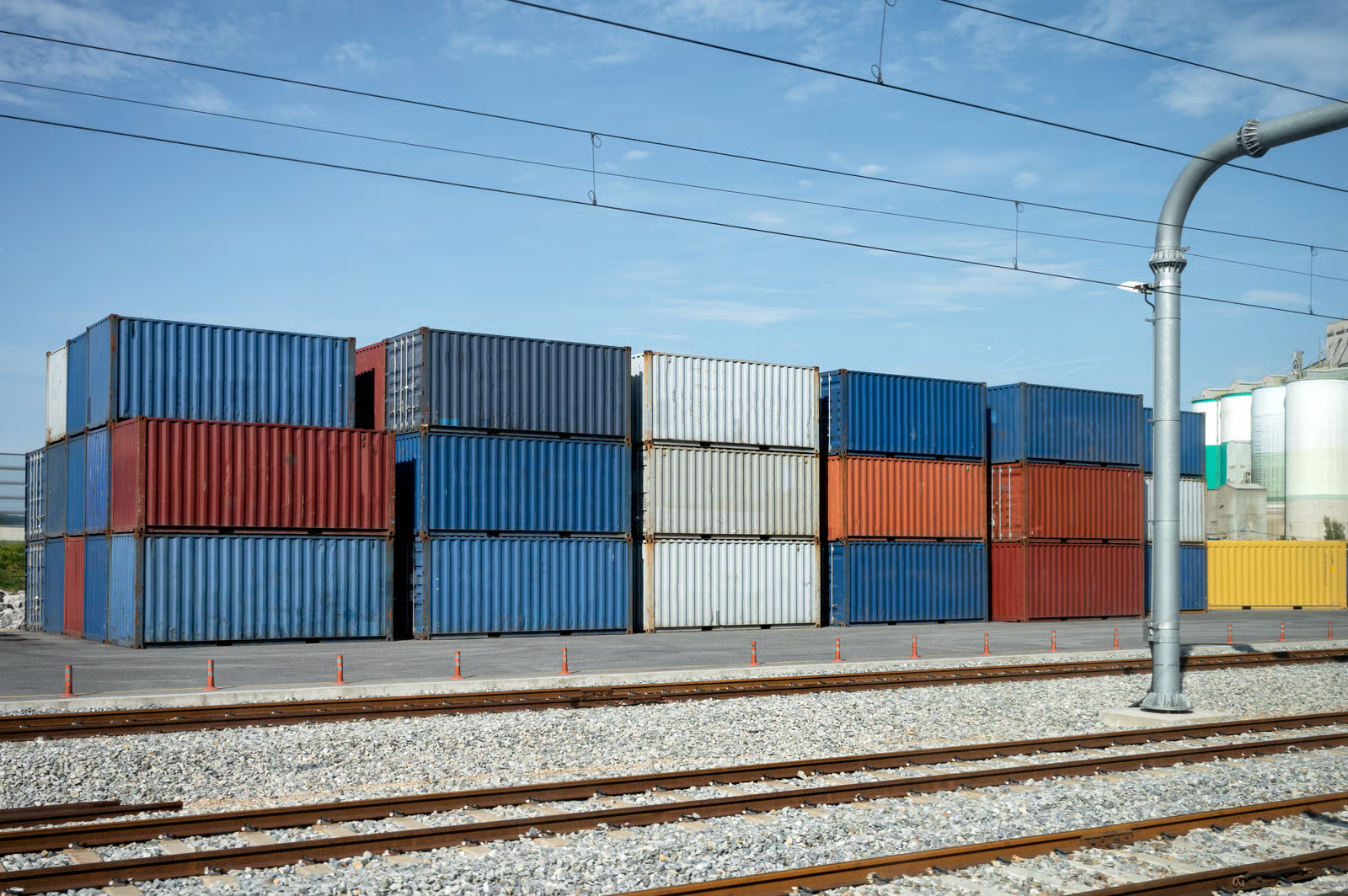
How intermodal transport works
A typical journey runs through a few clear stages:
- Load and seal at origin. The container is packed at the factory or warehouse and sealed with a numbered bolt seal.
- Drayage to the terminal. A truck hauls it a short distance, usually under 100 km, to a port or rail yard.
- Terminal handling. Cranes and reach stackers move the box onto the ship or train. The cargo is never opened.
- Line-haul. The long leg by sea or rail covers most of the distance.
- Transfer. At the destination port or inland terminal, the same sealed box shifts to the next mode.
- Final delivery. A truck takes it the last stretch to the receiver, who breaks the seal.
Because the cargo stays sealed from origin to destination, handling time drops and so does the chance of damage or theft.
Intermodal vs multimodal: the difference
People use these two words as if they mean the same thing. They do not, and the distinction matters when you book freight.
- Intermodal uses a separate contract for each leg. You (or your forwarder) arrange the trucker, the ocean carrier and the rail operator, and each is responsible only for their part.
- Multimodal uses one contract for the whole journey. A single operator takes responsibility door to door, even if they subcontract the actual legs.
Intermodal can give you more control and sometimes lower rates on each leg. Multimodal gives you one point of contact and one party to hold responsible if something goes wrong. Neither is better in the abstract; it depends on how much of the coordination you want to run yourself.
The TEU: how container capacity is counted
Container volume is measured in TEU, the Twenty-foot Equivalent Unit. One 20ft container is 1 TEU. A 40ft container is 2 TEU, sometimes written as 1 FEU (Forty-foot Equivalent Unit). Ports and ships quote their size in TEU, which is why you see figures like a vessel carrying 24,000 TEU.
Types of intermodal container
The same ISO frame carries several body styles. In short:
- Dry / General Purpose: the standard enclosed box, most of the world fleet. We stock these as ISO standard containers.
- High Cube: one foot taller for bulky, lightweight cargo.
- Reefer: refrigerated units for chilled and frozen goods. See our reefer containers.
- Open top, flat rack, open side, double door: for over-height and awkward loads, grouped as special containers.
- Tank: cylindrical tanks in an ISO frame for liquids and gases.
For the full breakdown, read our guide to the types of shipping containers.
Intermodal container sizes and specifications
The two lengths that dominate trade are 20ft and 40ft, with High Cube adding 305 mm of height. Full internal figures are on our shipping container sizes page.
|
Specification |
20ft |
40ft |
40ft High Cube |
45ft High Cube |
|
External length |
6.058 m |
12.192 m |
12.192 m |
13.716 m |
|
External width |
2.438 m |
2.438 m |
2.438 m |
2.438 m |
|
External height |
2.591 m |
2.591 m |
2.896 m |
2.896 m |
|
Internal volume |
~33 m3 |
~68 m3 |
~76 m3 |
~86 m3 |
|
Max gross weight |
30,480 kg |
30,480 kg |
30,480 kg |
30,480 kg |
|
Max payload |
~28,200 kg |
~26,700 kg |
~26,500 kg |
~25,600 kg |
Why intermodal shipping is used
The appeal comes down to a few concrete advantages:
- Lower cost on long hauls. Moving a container by rail or sea for the long leg, with trucks only at each end, often costs less than trucking the whole way.
- Lower emissions. Rail and sea produce far less CO2 per tonne-kilometre than road, so intermodal routing usually cuts the carbon footprint of a shipment.
- Fast, mechanised handling. A crane transfers a box in minutes, against hours of manual labour for loose cargo.
- Security. The sealed box travels closed from origin to destination, and the seal number and container code make it easy to track.
Who owns intermodal containers
Most containers belong either to shipping lines such as Maersk, CMA CGM and Hapag-Lloyd, or to leasing companies such as Triton and Textainer that hire them out to carriers and shippers. A recurring headache in the industry is the empty container: boxes pile up where imports outweigh exports and have to be repositioned, often empty, to where they are next needed. Repositioning empties is one of the larger hidden costs in container logistics, which is why carriers invest heavily in tracking and routing to reduce it.
Beyond shipping
Because the box is strong, stackable and weather-tight, intermodal containers get a second life well past their shipping years. Common conversions include site offices, pop-up shops and cafes, storage units, workshops and homes, built from customised container solutions.
Buying intermodal containers in Singapore
As a container supplier in Singapore, INFINEX supplies intermodal containers new and used, for sale and lease:
- Standard dry, reefer and special units, plus quality used containers.
- Sale, lease and one-way options to match your route and project length.
- Container accessories and custom builds through our technical team.
Frequently Asked Questions
Is an intermodal container the same as a shipping container?
Yes. They are the same standardised steel box. “Shipping container” is the everyday name; “intermodal container” stresses that it moves across more than one transport mode.
What sizes do intermodal containers come in?
The most common are 20ft and 40ft, with 45ft also in use. High Cube versions are one foot taller than standard, at 9ft 6in. See the specification table above.
What is the difference between intermodal and multimodal transport?
Intermodal uses a separate contract for each leg of the journey. Multimodal uses a single contract with one operator responsible for the whole door-to-door move.
What does TEU mean?
Twenty-foot Equivalent Unit. A 20ft container is 1 TEU and a 40ft container is 2 TEU. It is the standard way to measure ship and port capacity.
How long does an intermodal container last?
Around 10 to 15 years in active sea service. After that, a structurally sound box can serve much longer as storage or a conversion.
Can I buy a single intermodal container, or only in bulk?
Both. INFINEX supplies single units and fleets. Send your size, condition and quantity through our contact page for a quote.