Every year, hundreds of millions of tonnes of temperature-sensitive goods travel across oceans, roads, and railways. Fresh salmon from Norway, life-saving vaccines bound for Southeast Asia, sashimi-grade tuna headed to Tokyo. They all depend on reefer containers to arrive in perfect condition.
But what exactly is a reefer container, and how does it keep cargo cold (or warm) across thousands of kilometres? Whether you are a logistics professional, a business owner shipping perishable goods, or simply exploring cold chain options, this guide covers everything you need to know.
What Is a Reefer Container?
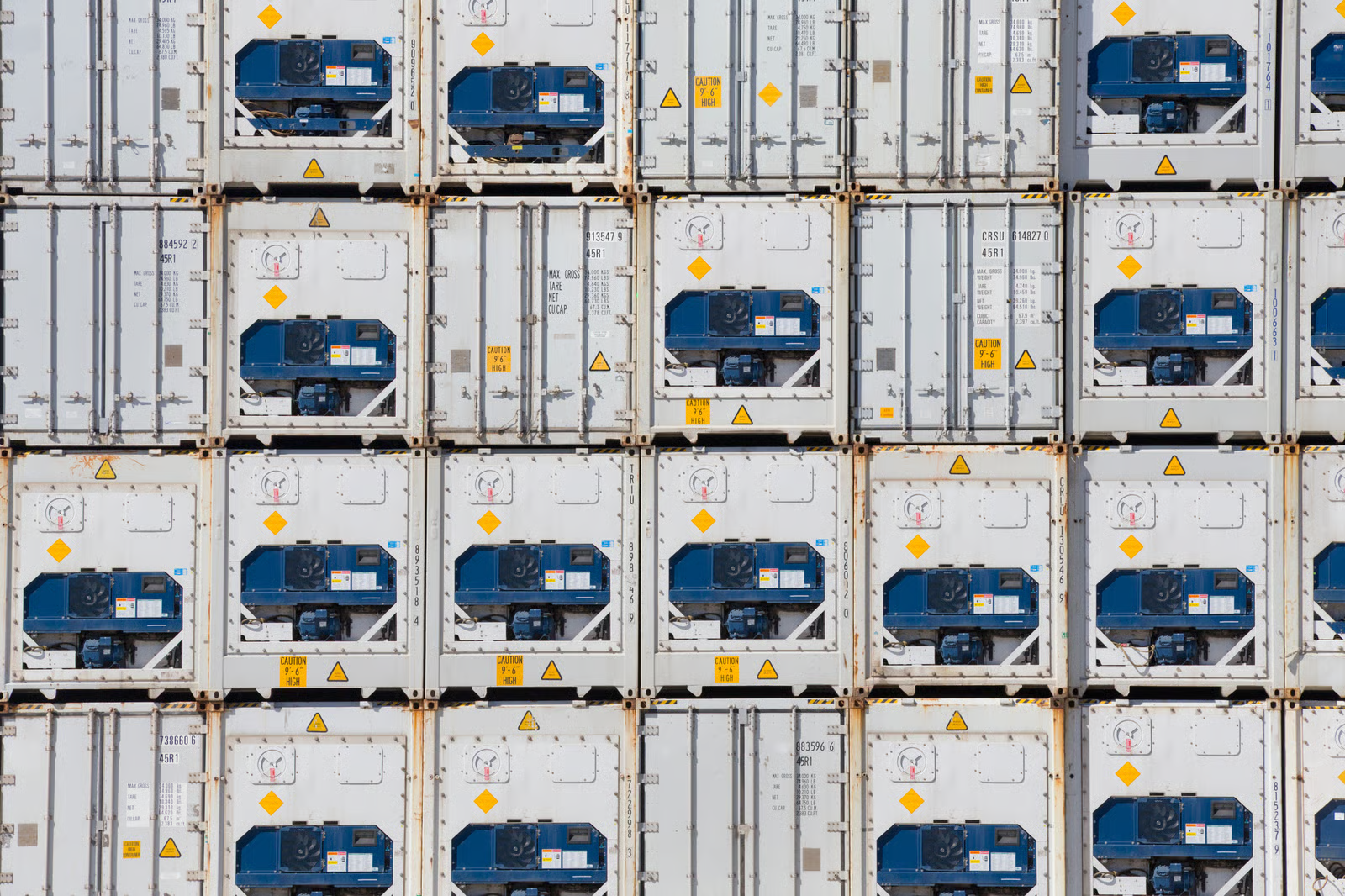
A reefer container is a specialised intermodal shipping container equipped with a built-in refrigeration unit that maintains a controlled temperature throughout transit. The word “reefer” is maritime slang derived from “refrigerated,” and it has been used in the shipping industry for decades.
Reefer containers are a critical link in the global cold chain, the unbroken series of refrigerated production, storage, and distribution activities that keep perishable products within a safe temperature range from origin to destination. Without reefers, international trade in fresh food, pharmaceuticals, and other temperature-sensitive goods would be impossible at today’s scale.
They look similar to standard dry containers on the outside, but they are fundamentally different in design and function:
| Feature | Dry Container | Reefer Container |
| Temperature Control | None | -30C to +30C (standard) |
| Insulation | Minimal | Thick polyurethane foam (65 to 100 mm) |
| Power Requirement | None | 460V, 3-phase electrical supply |
| Flooring | Flat plywood | T-bar (raised) aluminum flooring |
| Internal Volume | Larger | Smaller (due to insulation and machinery) |
| Weight (Tare) | Lighter | Heavier (refrigeration unit adds weight) |
| Cost | Lower | Higher (purchase, freight, and operation) |
As one of Singapore’s trusted shipping container suppliers, Infinex supplies reefer containers for both purchase and rental across a wide range of industries.

How Does a Reefer Container Work?
Reefer containers use the same fundamental principles as a home refrigerator, but they are engineered to withstand harsh maritime conditions, extreme ambient temperatures, and continuous operation for weeks at a time.
At the heart of every reefer is a vapour-compression refrigeration cycle. A compressor pressurises refrigerant gas and pushes it through the system. The gas releases heat in the condenser coils, condenses into liquid, then passes through an expansion valve where its pressure and temperature drop sharply. The cold refrigerant enters the evaporator coils inside the container, absorbs heat from the cargo air, and evaporates back into gas. The cycle repeats continuously.
The key components in this cycle:
- Compressor: Pressurises refrigerant gas and drives it through the system
- Condenser: Releases heat to the outside air, turning gas into high-pressure liquid
- Expansion valve: Rapidly reduces pressure and temperature of the liquid refrigerant
- Evaporator: Absorbs heat from the container interior, cooling the cargo space
Modern reefer containers use environmentally friendlier refrigerants such as R-134a, R-404A, or increasingly R-452A with lower global warming potential.
Insulation and Airflow
The walls, floor, ceiling, and doors are lined with high-density polyurethane foam (65 to 100 mm thick). The exterior shell is corrosion-resistant Corten steel, while the interior uses food-grade stainless steel or aluminum for hygiene and easy cleaning.
Unlike a domestic fridge, reefers use a bottom-delivery airflow system. Chilled air enters the cargo space through a T-bar floor (raised aluminum rails that create channels beneath the cargo), travels upward through the load, absorbs heat, and returns to the evaporator at the top. Proper stacking is essential. If boxes block the T-bar channels or the return airflow path, hot spots develop and spoil the goods.
Ventilation for Fresh Produce
Many reefer containers have fresh air vents that allow controlled air exchange with the outside. This is critical for fresh fruits and vegetables, which continue to respire after harvest, releasing CO2 and ethylene gas. Ethylene accelerates ripening, so vents help remove it while replenishing oxygen. Frozen goods require zero ventilation.
Important: Reefers Maintain Temperature, They Do Not Cool Cargo
A reefer is designed to maintain the temperature of cargo that has already been pre-cooled. It is not designed to bring warm cargo down to temperature. Loading warm product leads to compressor strain, uneven temperatures, condensation, and spoilage. Always pre-cool cargo to the set-point temperature before loading.
Reefer Container Temperature Range
Most standard reefer containers maintain temperatures from -30C to +30C, controlled via a digital controller with typical accuracy of plus or minus 0.5C.
| Cargo Type | Typical Temperature | Examples |
| Fresh Fruits and Vegetables | 0C to +13C | Bananas (+13C), apples (+1C), lettuce (+1C) |
| Frozen Foods | -18C or below | Frozen fish, meat, vegetables |
| Ice Cream | -23C to -25C | All ice cream products |
| Dairy Products | 0C to +4C | Milk, cheese, yoghurt, butter |
| Fresh Meat and Seafood | -1C to +2C | Beef, poultry, prawns, fresh fish |
| Pharmaceuticals | +2C to +8C | Vaccines, insulin, biologics |
| Chocolate and Confectionery | +12C to +18C | Chocolate bars, pralines |
| Flowers and Plants | +2C to +8C | Cut flowers, bulbs, seedlings |
| Wine and Beer | +10C to +15C | Bottled wine, craft beer |
For ultra-low temperature applications, super freezer containers can reach -60C to -70C using cascade refrigeration systems. These are used for sashimi-grade tuna, certain biological samples, and mRNA vaccine distribution.

Reefer Container Dimensions and Specifications
The two most common sizes are the 20-foot and 40-foot high cube models. For a broader overview of shipping container sizing, see our container sizes guide.
20ft Reefer Container
| Specification | Measurement |
| External Dimensions (L x W x H) | 6.058 m x 2.438 m x 2.591 m |
| Internal Dimensions (L x W x H) | 5.444 m x 2.268 m x 2.272 m |
| Internal Volume | 28.1 m3 |
| Tare Weight | 3,080 kg |
| Maximum Payload | 21,120 kg |
40ft High Cube Reefer Container
| Specification | Measurement |
| External Dimensions (L x W x H) | 12.192 m x 2.438 m x 2.896 m |
| Internal Dimensions (L x W x H) | 11.561 m x 2.268 m x 2.501 m |
| Internal Volume | 65.5 m3 |
| Tare Weight | 4,800 kg |
| Maximum Payload | 26,180 kg |
Reefer interiors are noticeably smaller than same-size dry containers because the polyurethane insulation (65 to 100 mm on each side) and the front-mounted refrigeration unit (300 to 450 mm deep) reduce usable space by roughly 20%.
Other sizes exist for specialised uses: 10ft offshore reefers (built to DNV 2.7-1 standards for oil and gas platforms) and 45ft reefers (used in European and North American domestic transport).
Infinex offers a variety of reefer sizes through our products page, including used containers at competitive prices.

Types of Reefer Containers
- Standard Reefer (20ft and 40ft): The workhorse of the cold chain. Operates within -30C to +30C and handles the vast majority of refrigerated cargo. Built to ISO standards and compatible with all major shipping lines.
- High Cube Reefer: Same footprint as a standard reefer but 1 foot taller (9 ft 6 in external height), providing roughly 13% more internal volume. The 40ft high cube is now the most common reefer in international shipping.
- Super Freezer: Reaches -60C to -70C using cascade refrigeration. Used for sashimi-grade tuna, medical specimens, and ultra-cold pharma storage. Consumes significantly more power.
- Blast Freezer: Unlike standard reefers, blast freezers actively freeze warm cargo. Used in fishing fleets and agricultural processing for rapid freezing immediately after harvest or catch.
- Cryogenic Container: Uses liquid CO2 or liquid nitrogen instead of mechanical refrigeration. No external power needed, silent operation, and fast pull-down. Limited operating duration based on tank size. Used for short-haul, high-value medical and research shipments.
- Dual-Temperature / Multi-Zone: Features partition walls allowing two or more temperature zones in a single container (e.g., -20C frozen and +4C chilled). Reduces the need for multiple containers when shipping mixed-temperature loads.
- Offshore Reefer (10ft): Compact, heavy-duty units for oil and gas platforms, built with reinforced lifting points, enhanced corrosion protection, and compact footprints for tight deck spaces.
Infinex offers customised solutions including modified reefer units for offshore and other specialised applications.
Power Requirements
Standard reefer containers require a three-phase electrical supply: 380V to 460V, 50Hz or 60Hz, drawing 15 to 30 amps during normal operation with power consumption of approximately 4 to 8 kW at steady state. Super freezers consume 10 to 15 kW or more.
Reefers draw power from three main sources:
- Vessel power: Dedicated reefer plugs on container ships (large vessels carry 1,000+ plugs)
- Shore power: Terminal-side power racks at ports during waiting, loading, or transshipment
- Generator set (genset): Diesel generators for road transport and locations without fixed power. Clip-on gensets attach to the container front (24 to 72 hours of fuel capacity). Underslung gensets mount beneath the trailer chassis.
The industry is also exploring solar-hybrid systems to supplement generator power and reduce diesel consumption, though fully solar-powered reefers are not yet viable for deep-sea routes.
Atmosphere Control and Monitoring
Controlled Atmosphere (CA) technology goes beyond temperature by actively regulating O2, CO2, and N2 levels inside the container. By reducing oxygen from 21% to 2 to 5% and increasing CO2, CA slows the metabolic rate of fresh produce and can extend shelf life by days or weeks. Major systems include Carrier’s NaturaFRESH and Daikin’s CA Star.
Modern reefer containers maintain relative humidity between 60% and 95% depending on cargo, with some units featuring active humidity injection for produce and flowers.
Every modern reefer includes a data logger recording temperature, humidity, power status, defrost cycles, door openings, and alarms. Many units now feature telematics transmitting real-time data via cellular or satellite networks, enabling GPS tracking, live temperature monitoring, instant deviation alerts, and remote settings adjustment.

What Cargo Can You Ship in a Reefer Container?
Food and Beverages (the largest share of reefer cargo globally):
- Fresh fruits (bananas, citrus, grapes, berries, avocados, mangoes)
- Fresh vegetables (lettuce, broccoli, asparagus, peppers)
- Chilled and frozen meat, poultry, and seafood
- Dairy products (milk, cheese, butter, yoghurt)
- Beverages (wine, beer, fruit juices)
- Processed foods, bakery products, and ice cream
Pharmaceuticals and Medical:
- Vaccines (+2C to +8C), insulin, biologics
- Blood plasma and blood products
- Clinical trial materials
Flowers, Agriculture, and Specialty:
- Cut flowers (shipped at +2C to +4C with high humidity)
- Seeds, bulbs, live plants
- Temperature-sensitive paints, adhesives, resins
- Cosmetics, electronic components, artwork
- Candles and wax products (preventing melt in tropical climates)
Browse the full range of reefer containers and accessories available from Infinex to find the right fit for your cargo.
Advantages of Reefer Containers
- Precision temperature control with accuracy of plus or minus 0.5C throughout the journey
- Intermodal compatibility across ships, trucks, and rail without breaking the cold chain
- Reduced spoilage and waste through optimal temperature and atmosphere conditions
- Real-time monitoring via telematics, data logging, and remote alerts
- Extended shelf life with CA technology, extending produce freshness by up to 50%
- Dual-purpose flexibility as they can function as dry containers with refrigeration switched off
- Energy efficiency in modern units with variable-speed compressors (up to 40% savings over older models)
- Regulatory compliance with food safety (HACCP, FDA, EU) and pharmaceutical (GDP, WHO) standards
- Multiple size options from 10ft offshore units to 45ft domestic trailers
- Self-sufficient operation when paired with clip-on or underslung gensets for remote locations
Disadvantages of Reefer Containers
- Higher cost: New 40ft reefers cost USD 25,000 to 45,000 versus USD 3,000 to 6,000 for dry containers
- Freight surcharges: Shipping lines charge 50% to 100% more than dry container rates, plus PTI and plug-in fees
- Power dependency: Continuous electrical supply required; power interruption can compromise cargo within hours
- Smaller internal volume: Insulation and machinery reduce interior space by roughly 20%
- Heavier tare weight: Refrigeration adds 1,500 to 2,000 kg, reducing maximum payload
- Not designed to cool warm cargo: Products must be pre-cooled before loading
- Specialised maintenance required: Trained refrigeration technicians needed for compressor, refrigerant, and electrical repairs
- Operational complexity: Additional planning, documentation, pre-trip inspections, and power coordination versus dry cargo
Reefer Container Costs
Purchase prices (approximate):
| Container Type | New Price (USD) | Used Price (USD) |
| 20ft Reefer | 18,000 to 30,000 | 8,000 to 15,000 |
| 40ft High Cube Reefer | 25,000 to 45,000 | 12,000 to 22,000 |
| Super Freezer (40ft) | 50,000 to 80,000 | 30,000 to 50,000 |
Rental rates (approximate):
- 20ft reefer: USD 100 to 250 per day
- 40ft high cube reefer: USD 150 to 350 per day
Long-term leases (12 months or more) offer significantly lower daily rates. Speak to the Infinex team for reefer container availability and current pricing on new and used containers in Singapore and the wider Asia-Pacific region.
Additional freight charges include Pre-Trip Inspection fees (USD 50 to 150), plug-in/monitoring fees (USD 30 to 80 per day), genset rental (USD 50 to 150 per day plus fuel), and reefer-specific fuel surcharges.
Ongoing operational costs cover electricity, routine maintenance, refrigerant top-ups, cleaning between loads, and annual certification and calibration.
Maintenance and Best Practices
Pre-Trip Inspection (PTI)
A PTI is mandatory before every loaded journey. It verifies that the refrigeration unit is functioning correctly and that the container is cargo-worthy, covering compressor and condenser operation, sensor accuracy, door gaskets, defrost system, refrigerant levels, electrical connections, ventilation, data logger, and interior cleanliness.
Loading Best Practices
- Pre-cool all cargo to the target shipping temperature before loading
- Pre-cool the container for frozen cargo (30 to 60 minutes); avoid pre-cooling for chilled cargo to prevent condensation
- Do not stack above the red load line marked on interior walls
- Keep T-bar floor channels and the area in front of the evaporator clear
- Maintain at least 5 cm gaps between cargo and side walls for air circulation
- Use ventilated cartons for fresh produce
- Secure loads with lashing bars or straps to prevent shifting
Routine Maintenance
- Daily: Check and compare supply air versus return air temperatures
- Weekly: Inspect and clean condenser coils
- Monthly: Check door gaskets, drain lines, and air filters
- Quarterly: Inspect electrical connections, fan blades, and belts
- Annually: Full service by certified technician including compressor oil analysis, refrigerant charge check, sensor calibration, and software updates
Our reefer units at Infinex come fully inspected and certified. For services including maintenance guidance and container supply, contact us to discuss your requirements.
Frequently Asked Questions
What does “reefer” mean in shipping?
“Reefer” is maritime slang for “refrigerated.” It refers to any intermodal container equipped with a built-in refrigeration unit for transporting temperature-sensitive cargo.
What is the difference between a reefer container and a refrigerated truck?
A reefer container is an intermodal unit that travels by ship, truck, and rail. A refrigerated truck has the cooling unit built into the vehicle. Reefer containers offer greater flexibility because they transfer between transport modes without unloading cargo.
How long can a reefer container maintain temperature without power?
A well-insulated, fully loaded frozen reefer can typically hold safe temperatures for 4 to 8 hours without power, depending on ambient conditions and insulation condition. Chilled cargo has a shorter window. Relying on insulation alone is not recommended.
Can a reefer container freeze cargo?
Standard reefers maintain temperature only. Specialised blast freezer containers have the cooling capacity to actively freeze products from ambient temperatures.
How much does it cost to ship a reefer container internationally?
Ocean freight for a 40ft reefer from Asia to Europe typically ranges from USD 3,000 to 8,000, plus surcharges for PTI, plug-in, and monitoring. Rates fluctuate significantly with market conditions.
Can I use a reefer container for stationary cold storage?
Yes. Reefer containers are widely used as portable or semi-permanent cold storage by restaurants, supermarkets, hospitals, event venues, and food processors. They simply need a three-phase electrical connection or a generator.
Can I buy a used reefer container?
Yes. Used reefers offer a cost-effective option, especially for stationary cold storage. When buying used, check the refrigeration unit age and condition, compressor life, insulation integrity, and door gaskets. Infinex offers quality-checked used reefer containers with transparent condition reports.
What is the lifespan of a reefer container?
A well-maintained reefer lasts 12 to 15 years in active shipping service. The refrigeration unit may need major overhaul after 8 to 10 years. For stationary cold storage with less wear, reefers can remain functional for 20 years or more.