
ISO tank containers are how the world moves bulk liquid, from edible oils and wine to industrial chemicals. This guide explains what an ISO tank container is, the difference between a T11 and a T14, the capacity and specs, and what each type is built to carry.
What is an ISO tank container?
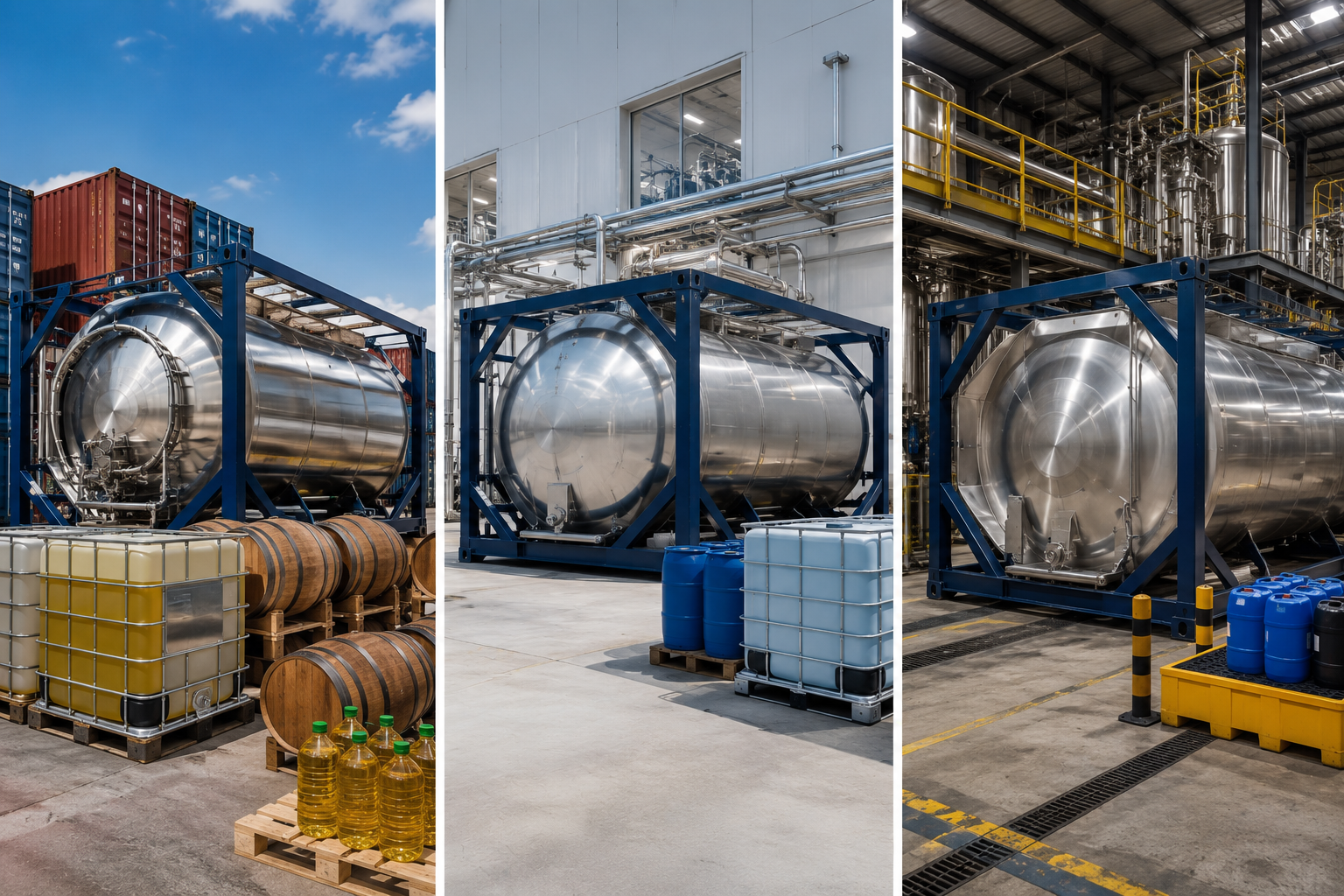
An ISO tank container, sometimes written as an ISO tanks container, is a cylindrical stainless steel tank mounted inside a standard ISO container frame. Because the frame matches a normal 20ft box, the tank stacks, lifts and moves by ship, rail and truck exactly like any other iso container, but carries liquids and gases instead of dry cargo.
The tank itself is usually a 316L stainless steel barrel inside a carbon steel frame. That grade of steel resists corrosion, cleans up well between loads, and is safe for food and pharmaceutical products. It is the most efficient and secure way to move bulk liquid over long distances.
ISO tank container specifications
ISO tanks sit in a 20ft frame, so the external footprint matches a standard 20ft container. Capacity, tare and pressure vary by build, so always confirm the figures and the last test date before booking cargo.
|
Specification |
Standard 20ft ISO tank |
|
Frame |
20ft ISO (6.06 x 2.44 x 2.59 m) |
|
Barrel material |
316L stainless steel |
|
Capacity |
21,000 to 26,000 litres |
|
Min shell thickness |
~4.18 mm (316L) |
|
Min test pressure |
~4 bar (T11), ~6 bar (T14) |
|
Tare weight |
~3,600 to 4,200 kg |
|
Max gross weight |
up to 36,000 kg |
|
Fill range for transit |
80 to 95 percent |
Why the 80 to 95 percent fill rule? A tank is never filled to the brim or left too empty. Below 80 percent the liquid can surge and destabilise the unit; above 95 percent there is no room for the cargo to expand with temperature. Staying in that band keeps transit safe.
T11 vs T14: which tank do you need?
The two most common UN portable tank types are the T11 and the T14. The choice comes down to what you are carrying.
|
Feature |
T11 |
T14 |
|
Interior |
Bare 316L stainless steel |
Lined for aggressive cargo |
|
Min test pressure |
~4 bar |
~6 bar |
|
Typical cargo |
Food-grade oils, wine, spirits, non-corrosive and many classified liquids |
Corrosive chemicals, strong acids and hazardous liquids |
|
Most common use |
General and food-grade bulk liquid |
Specialised chemical transport |
For cryogenic or gas service, the range extends to T50 (gas) and T75 (cryogenic) tanks. Those are specialist units, so ask about availability for your specific cargo.
What ISO tanks carry
- Food grade: edible oils, wine, spirits and fruit juices in clean 316L tanks.
- Chemicals: non-hazardous and classified liquid chemicals, resins and solvents.
- Hazardous and corrosive: acids and aggressive chemicals in lined T14 tanks under UN rules.
- Pharma and feed: products that need the cleanliness of stainless steel.
Key features
- A 316L stainless steel barrel for corrosion resistance and easy cleaning.
- A top manlid for loading and a bottom discharge valve for unloading.
- Optional insulation with steam or electric heating coils to keep viscous cargo pumpable.
- Pressure and vacuum relief valves for safe transit.
- ISO corner castings, so the tank handles like a standard container.
ISO tank vs dry and reefer containers
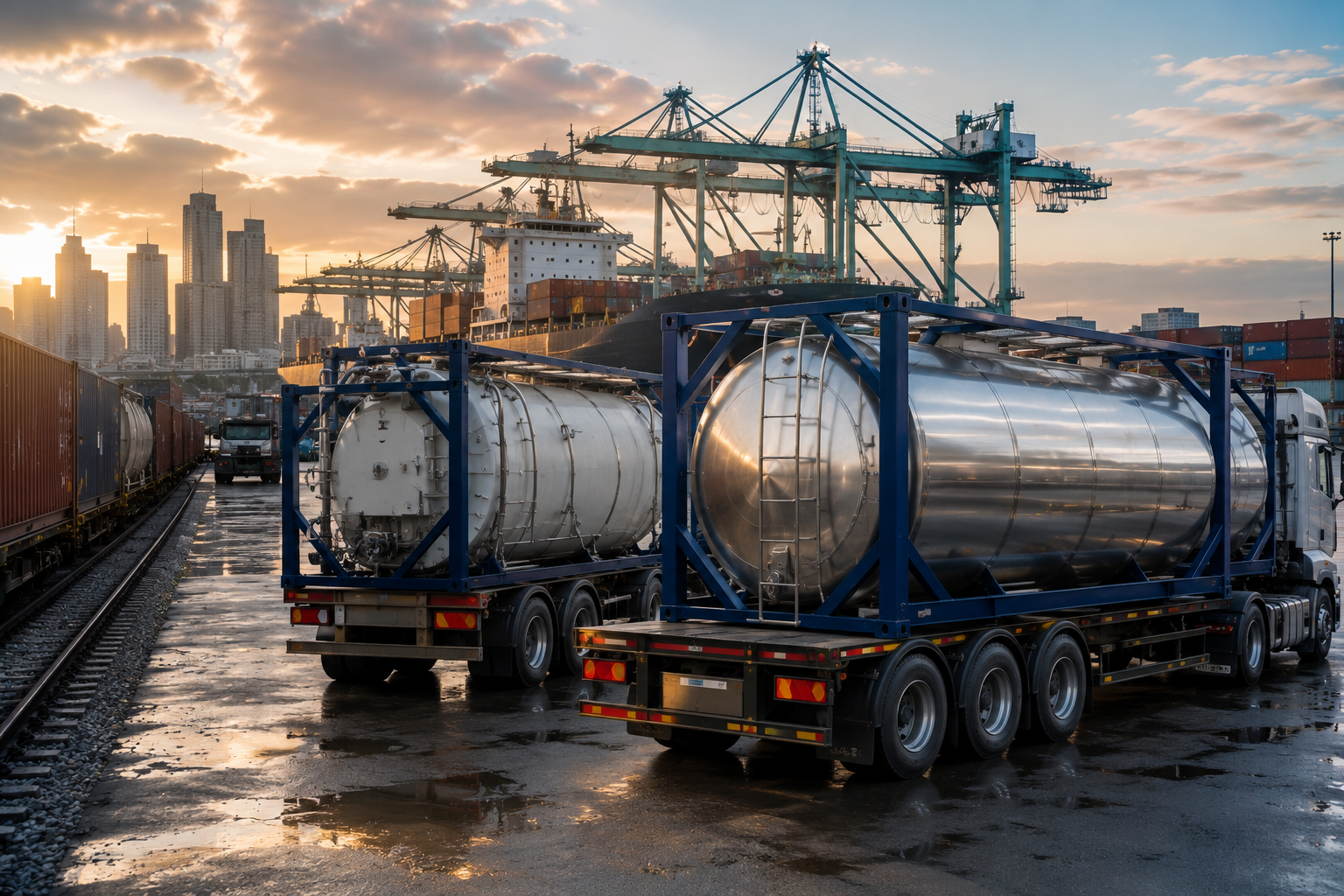
An ISO tank is one of several ISO container body styles. A dry container carries boxed and palletised goods; a reefer container carries chilled and frozen cargo; an ISO tank carries bulk liquid and gas. They all share the same frame and fittings, which is what lets them move through the same ports and on the same ships. For the full family, see our guide to the types of shipping containers.
Buying or leasing ISO tank containers in Singapore
As a container supplier in Singapore, INFINEX supplies T11 and T14 ISO tank containers for sale and lease, new and used. Tell us the cargo, its UN class, the capacity you need and whether you want to buy or hire, and we will match the right tank. Browse the full container range or contact us for a quote.
Frequently asked questions
What is an ISO tank container?
An ISO tank container is a stainless steel tank built inside a standard 20ft ISO frame for carrying bulk liquids and gases. It moves by ship, rail and truck like a normal container while holding 21,000 to 26,000 litres of liquid cargo.
How many litres does an ISO tank container hold?
Most standard ISO tanks hold between 21,000 and 26,000 litres, with the wider T11 and T14 range running from about 17,500 up to 26,000 litres depending on the build.
What is the difference between a T11 and a T14 tank?
A T11 has a bare 316L stainless interior and a test pressure around 4 bar, suited to food-grade and non-corrosive liquids. A T14 has a lined interior and higher pressure around 6 bar for corrosive and hazardous chemicals.
Can ISO tanks carry food-grade cargo?
Yes. The 316L stainless steel barrel is suitable for food, feed and pharmaceutical liquids such as edible oils, wine and spirits, provided the tank is cleaned to the right standard between loads.
Do you sell or lease ISO tank containers in Singapore?
Both. INFINEX offers ISO tank containers for outright purchase and for lease. Send your cargo type, UN class and duration through our contact page for a quotation.