
ISO containers are the standardised steel boxes that carry most of the world’s cargo. This guide explains the standards behind them, how to read the code stencilled on the door, the common sizes and types, and where they are used, so you can pick the right unit with confidence.
What Are ISO Containers?
An ISO container is a shipping container built to standards set by the International Organization for Standardization. Also called an intermodal, freight or cargo container, it is a steel box designed so the same unit can move by ship, rail and truck without the goods inside ever being repacked. Standardised size, corner fittings and stacking strength are what make that possible.
The scale is enormous. More than 30 million containers are in circulation, and roughly 80 to 90 percent of the world’s non-bulk cargo travels inside one. If you buy or move goods internationally, you are almost certainly relying on an ISO container somewhere in the chain.
Looking for ISO containers in Singapore? Browse our range of iso containers for sale in Singapore.
What ISO Actually Does (and a Short History)
A common misconception is that ISO makes containers. It does not. ISO is a standards body, founded in 1947, that publishes the specifications every manufacturer, port and shipping line agrees to follow. The container itself is built by manufacturers to those rules.
The modern container dates to 1956, when the stackable steel box was patented and quickly proved it could cut loading time and cargo damage. Global uptake accelerated through the 1960s, and by 1968 ISO had published the core dimensional standards that fixed the shape of world trade. Because every box shares the same footprint and fittings, a container loaded in Singapore drops straight onto a truck chassis in Rotterdam.
The ISO Standards Behind Every Container
“ISO compliant” points to a family of standards, each covering a different aspect of the box. The ones that matter most to buyers are the first four:
| Standard | What it covers |
|---|---|
| ISO 668 | Classification, external and internal dimensions, and gross weight ratings |
| ISO 6346 | Coding, marking and identification (the code on the door) |
| ISO 1496 | Structural specification and testing for stacking and lifting |
| ISO 1161 | Corner fittings, the cast steel blocks used to lift, stack and secure |
| ISO 830 | Vocabulary and terminology |
| ISO 3874 | Handling and securing procedures |
The CSC plate. Under the international Convention for Safe Containers, every unit in shipping service carries a CSC safety approval plate. It is valid for the first five years from manufacture, then requires re-inspection, typically on a 30 month cycle. Always check the CSC plate before booking a container for sea freight.
How to Read the Code on a Container
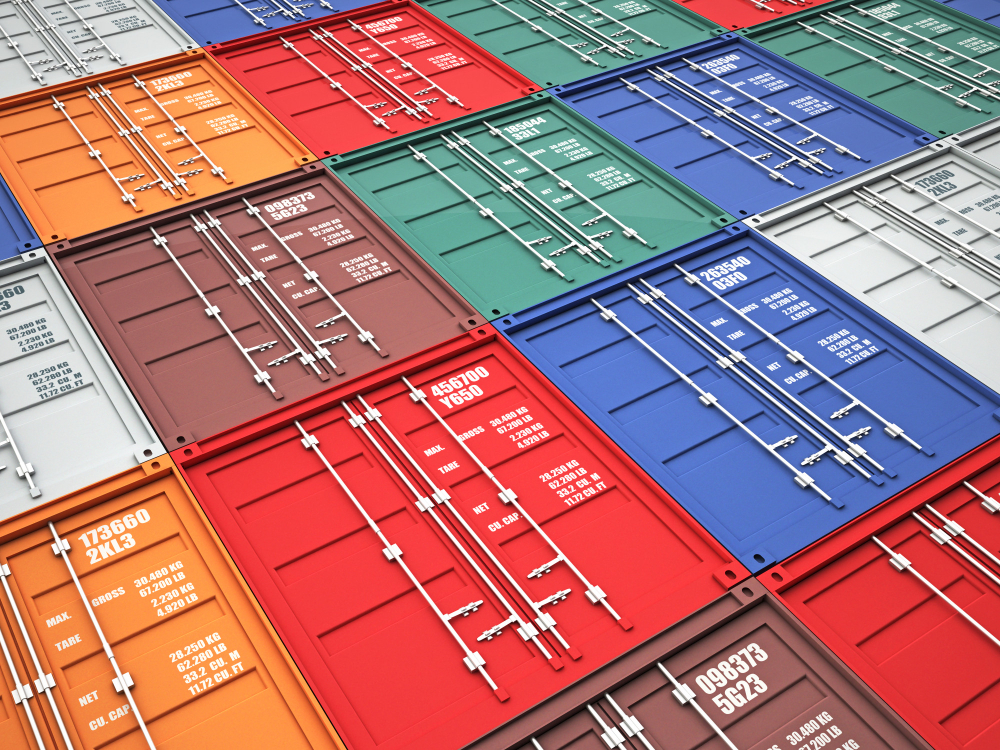
Every ISO container carries a unique identity under ISO 6346, stencilled on the doors and sides. It looks like INFU 123456 7 with a four-character size-type code nearby, for example 22G1. Here is what each part means:
- Owner prefix (INF): three letters identifying the owner or operator, registered with the Bureau International des Containers (BIC).
- Equipment category (U): a single letter. U is a freight container, J is detachable equipment, Z is a trailer or chassis.
- Serial number (123456): six digits assigned by the owner to that individual unit.
- Check digit (7): a single digit calculated from the rest of the code to catch typing and scanning errors.
- Size-type code (22G1): four characters describing the length, height and container type, explained below.
Nearby you will also see the operational marks: the tare weight (empty weight), the maximum gross weight, and the payload (maximum cargo weight).
The ISO 6346 Size-Type Code, Character by Character
The four-character size-type code packs a lot into a small stencil. Read it left to right.
First character: length
| Code | Length |
|---|---|
| 2 | 20 ft |
| 4 | 40 ft |
| L | 45 ft |
Second character: height (and width)
| Code | External height |
|---|---|
| 0 | 8 ft 0 in (2,438 mm) |
| 2 | 8 ft 6 in (2,591 mm), standard |
| 4 | 9 ft 0 in (2,743 mm) |
| 5 | 9 ft 6 in (2,896 mm), High Cube |
Third and fourth characters: container type
| Letter | Container type |
|---|---|
| G | General purpose (dry / GP) |
| V | General purpose with ventilation |
| R | Refrigerated (reefer, integral unit) |
| H | Insulated / thermal (external unit) |
| U | Open top |
| P | Platform and flat rack |
| T | Tank |
| B | Bulk (dry bulk) |
| S | Named cargo (livestock, vehicles) |
Worked examples
| Code | Means |
|---|---|
| 22G1 | 20 ft, 8 ft 6 in, general purpose |
| 42G1 | 40 ft, 8 ft 6 in, general purpose |
| 45G1 | 40 ft, 9 ft 6 in High Cube, general purpose |
| 22R1 | 20 ft, 8 ft 6 in, reefer |
| 45R1 | 40 ft High Cube, reefer |
| 22U1 | 20 ft, open top |
| 42P1 | 40 ft, flat rack |
| 22T1 | 20 ft, tank |
Standard ISO Container Dimensions
The two lengths that dominate world trade are 20 ft and 40 ft, with High Cube adding 305 mm of height. Full internal figures and weights are on our shipping container sizes page.
| Unit | Length | Width | Height | Capacity |
|---|---|---|---|---|
| 20 ft standard | 6,058 mm | 2,438 mm | 2,591 mm | ~33 m³ |
| 40 ft standard | 12,192 mm | 2,438 mm | 2,591 mm | ~68 m³ |
| 40 ft High Cube | 12,192 mm | 2,438 mm | 2,896 mm | ~76 m³ |
Types of ISO Container
The same ISO framework carries many body styles. In brief:
- Dry / General Purpose – the standard enclosed box, about 90 percent of the fleet. We stock these as ISO standard containers.
- High Cube – one foot taller for bulky, lightweight cargo.
- Reefer – refrigerated units holding -30 to +30 C. See our reefer containers.
- Open top, flat rack, open side, double door – for over-height and awkward loads, grouped as special containers.
- Tank, bulk, ventilated, half-height – purpose-built for liquids, powders and dense cargo.
For a full breakdown, read our guide to the types of shipping containers.
What Makes a Container an ISO Container
Beyond the dimensions, standardisation shows up in the hardware every unit shares:
- Corner castings: eight cast steel blocks (ISO 1161) that let cranes lift and twist-locks secure any box the same way.
- Corrugated steel walls: usually weathering (COR-TEN) steel that resists corrosion and adds rigidity.
- Forklift pockets and tunnels: on many 20 ft units, for handling without a crane.
- Cargo-securing points and marine plywood floor: for lashing loads and taking forklift traffic.
- Weather-tight door gaskets: keeping the interior wind and watertight.
Benefits and Common Uses
Standardisation is the whole point, and it pays off in three ways: intermodal efficiency (load once, move across ship, rail and road), security (heavy steel and lockable doors), and durability (a well-kept box lasts 25 years or more). Those same qualities make containers useful well beyond shipping:
- Freight: international sea, rail and road transport.
- Storage: on-site, seasonal and secure self-storage.
- Conversions: site offices, pop-up retail, cafes, workshops and homes, built from customised container solutions.
Buying ISO Containers in Singapore
As a container supplier in Singapore, INFINEX supplies the full range of ISO containers, new and used, for sale and lease:
- Standard dry, reefer and special units, plus competitively priced used containers.
- Custom builds for offices, workshops and retail through our technical team.
- Container accessories such as lock boxes, ventilation and shelving.
- Guidance from enquiry to delivery, so you get the right grade first time.
Frequently Asked Questions
What does ISO stand for in shipping containers?
ISO stands for the International Organization for Standardization. It is the body that sets the dimensional, structural, and identification standards that all shipping containers must meet for international trade.
What sizes do ISO containers come in?
The most common sizes are 20ft and 40ft. Other available sizes include 10ft, 45ft, 48ft, 53ft, and 60ft, though availability varies by region. High cube variants (9’6″ tall instead of 8’6″) are available in most lengths.
What does the code on a container mean
Under ISO 6346 it is the container’s identity: a three-letter owner prefix, the letter U for freight container, a six-digit serial number and a check digit, plus a four-character size-type code such as 22G1 (20 ft, 8 ft 6 in, general purpose).
How long do ISO containers last?
With proper maintenance, an ISO container can last 25 years or more. CSC certification is valid for 5 years from manufacture, with inspections required every 30 months for containers in active shipping service.
Can ISO containers be modified or converted?
Absolutely. Containers are routinely converted into offices, homes, retail spaces, workshops, and specialised facilities. Infinex offers professional customised container solutions for any application.
How many containers can be stacked?
ISO standards allow stacking up to 9 containers high. Modern container ships routinely stack 10–11 high, with some ultra-large vessels reaching 21 high.
Are ISO containers wind and watertight?
New and well-maintained containers are certified as wind and watertight (WWT). Over time, seals may degrade and require maintenance. Regular inspection of door gaskets and roof seams is recommended.
Should I buy a new or used container?
It depends on your requirements. New or one-trip containers offer the best condition and longest lifespan. Used containers provide excellent value for storage and conversion projects. Single-trip containers (used only once for shipping from the factory) offer a cost-effective middle ground.
Looking for shipping containers in Singapore? INFINEX Containers is your trusted supplier for new, used, and customised ISO containers. Contact us today for a free consultation.