
If you have shipped goods internationally or explored container solutions for storage, you have come across the term “GP container.” But what exactly is it, and why does it dominate the global logistics industry? This guide covers everything from dimensions and weight specs to use cases and how the GP container compares to every other type on the market.
What Is a GP Container?
GP stands for General Purpose. A GP container is the standard, enclosed steel shipping container used to transport dry cargo by sea, rail, and road. It is also called a dry container or dry van, and it accounts for roughly 70% to 80% of the entire global container fleet.
The design is a rectangular steel box with corrugated walls, a solid roof, a marine plywood floor, and double swing doors at one end. No refrigeration, no open tops, no collapsible sides. The GP container does one thing exceptionally well: protect dry cargo from the elements.
GP containers are built to ISO 668 and ISO 1496 standards, meaning every container shares the same external dimensions, corner fitting locations, and structural ratings regardless of manufacturer. A GP container loaded in Singapore can be lifted onto a rail car in Europe and placed on a truck in the United States without modification. INFINEX is one of Singapore’s trusted GP container suppliers, stocking both new and used units for buyers across the region.
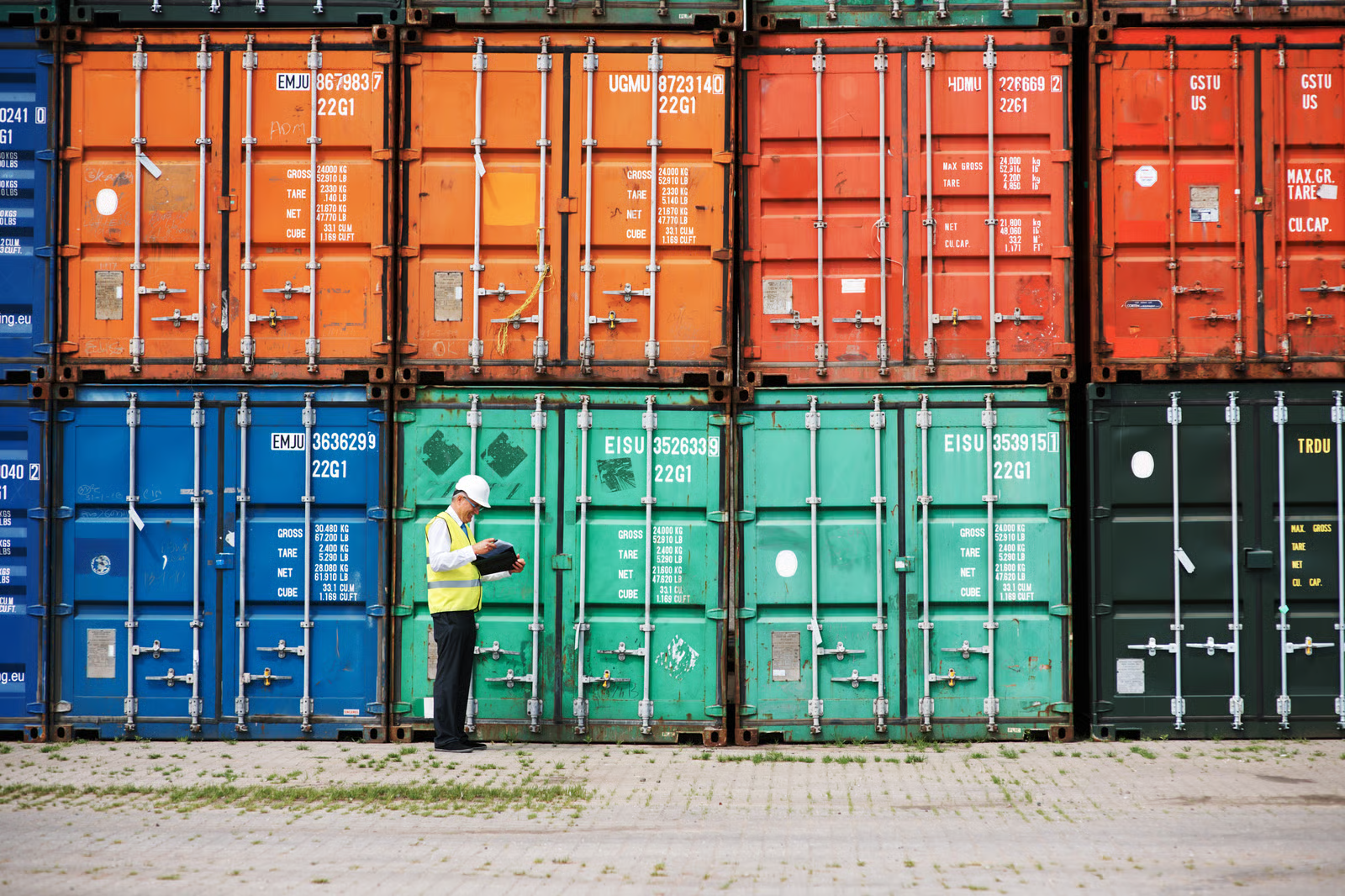
The two standard sizes are the 20-foot and 40-foot GP container, both standing 8 ft 6 in (2.591 m) tall externally.
GP Container Sizes and Dimensions
Understanding exact dimensions is essential for cargo planning and transport logistics. Our team at Infinex can advise on the right size for your cargo, but here are the detailed specs. For a broader overview, see our container sizes guide.
20ft GP Container
The 20-foot GP is the original standard unit. The industry measurement “TEU” (Twenty-foot Equivalent Unit) is based on this container.
| Specification | Imperial | Metric |
| External Length | 20 ft 0 in | 6.058 m |
| External Width | 8 ft 0 in | 2.438 m |
| External Height | 8 ft 6 in | 2.591 m |
| Internal Length | 19 ft 4 in | 5.898 m |
| Internal Width | 7 ft 8 in | 2.352 m |
| Internal Height | 7 ft 10 in | 2.393 m |
| Door Width | 7 ft 8 in | 2.340 m |
| Door Height | 7 ft 6 in | 2.280 m |
| Internal Volume | 1,172 cu ft | 33.2 CBM |
| Tare Weight | 4,916 lbs | 2,230 kg |
| Max Payload | 61,289 lbs | 27,800 kg |
| Max Gross Weight | 66,139 lbs | 30,480 kg |
40ft GP Container
The 40-foot GP offers roughly double the floor space and volume of the 20-foot unit. It is the preferred choice for lighter, voluminous cargo.
| Specification | Imperial | Metric |
| External Length | 40 ft 0 in | 12.192 m |
| External Width | 8 ft 0 in | 2.438 m |
| External Height | 8 ft 6 in | 2.591 m |
| Internal Length | 39 ft 5 in | 12.032 m |
| Internal Width | 7 ft 8 in | 2.352 m |
| Internal Height | 7 ft 10 in | 2.393 m |
| Door Width | 7 ft 8 in | 2.340 m |
| Door Height | 7 ft 6 in | 2.280 m |
| Internal Volume | 2,389 cu ft | 67.7 CBM |
| Tare Weight | 8,333 lbs | 3,780 kg |
| Max Payload | 59,040 lbs | 26,700 kg |
| Max Gross Weight | 67,197 lbs | 30,480 kg |
Quick Size Comparison
| Feature | 20ft GP | 40ft GP | 40ft High Cube |
| External Height | 8 ft 6 in | 8 ft 6 in | 9 ft 6 in |
| Internal Height | 7 ft 10 in | 7 ft 10 in | 8 ft 10 in |
| Internal Volume (CBM) | 33.2 | 67.7 | 76.3 |
| Tare Weight (kg) | 2,230 | 3,780 | 3,900 |
| Max Payload (kg) | 27,800 | 26,700 | 26,580 |
| Max Gross (kg) | 30,480 | 30,480 | 30,480 |
| TEU Equivalent | 1 | 2 | 2 |
While the 40ft containers have more volume, the 20ft GP actually has a higher maximum payload. All three sizes share the same maximum gross weight of 30,480 kg, and the heavier tare weight of larger containers reduces the available payload.
Weight Specifications and Loading Capacity
Getting weight and volume calculations right is critical. Overloaded containers are a safety hazard, a regulatory violation, and a costly mistake that can result in port rejections and fines.
The maximum gross weight (tare plus payload) is stamped on every container’s CSC plate and must never be exceeded. Also check road weight limits in your destination country. Many jurisdictions impose axle-weight restrictions that effectively limit a 20ft container’s payload to around 21,000 to 24,000 kg in practice.
CBM Capacity: Total vs Usable
| Container | Total CBM | Realistic Usable CBM | Utilisation Rate |
| 20ft GP | 33.2 | 25 to 28 | 75% to 85% |
| 40ft GP | 67.7 | 50 to 58 | 75% to 86% |
The gap comes from irregular carton sizes, stacking limitations, airflow gaps, dunnage materials, and odd-shaped spaces near the ceiling and corners.
Pallet Count
Standard pallets (1,200 mm x 1,000 mm):
- 20ft GP: 10 pallets (single floor layer)
- 40ft GP: 21 pallets (single floor layer)
Euro pallets (1,200 mm x 800 mm):
- 20ft GP: 11 pallets
- 40ft GP: 23 to 24 pallets
If your cargo is stackable, double-stacking significantly increases units per container. Always verify that the combined weight stays within maximum payload.
Loading Tips
- Distribute weight evenly. Place heaviest items on the floor and towards the centre to prevent shifting during transit.
- Stack smartly. Heavier cartons at the bottom, lighter ones on top. Never stack fragile goods beneath heavy items.
- Use dunnage and bracing. Fill gaps with airbags, foam, or timber. Secure loads with lashing straps attached to the container’s internal lashing rings.
- Brace the door end. Poorly secured cargo can fall out when doors open. Use a cargo net or timber barrier near the door end.
- Check floor weight limits. The plywood floor can handle a forklift with a combined wheel load of approximately 5,460 kg. Use timber spreaders for concentrated point loads.
Construction Materials and Build Quality
A GP container is engineered to survive decades of harsh maritime service. Here is what goes into one.
COR-TEN Steel. The walls, roof, and structural frame are made from COR-TEN steel (weathering steel). It contains copper, chromium, nickel, and phosphorus that form a protective rust-coloured patina when exposed to weather, acting as a barrier against further corrosion. Corrugated wall panels are typically 1.6 mm to 2.0 mm thick, with the corrugation pattern adding rigidity against racking forces.
Corner Posts and Frame. Four corner posts serve as the primary load-bearing elements, each rated to support approximately 60 tonnes of compressive load. This allows containers to be stacked 9 high when fully loaded. The frame includes top and bottom side rails, end rails, a header bar above the doors, and steel cross members supporting the floor. Eight standardised ISO 1161 corner castings at each corner enable lifting, stacking, and securing across all handling equipment worldwide.
Marine Plywood Floor. The floor is 28 mm thick marine-grade plywood, typically Apitong hardwood bonded with phenolic resin. It is moisture-resistant, strong enough for forklift traffic, and treated against insects and fungal decay per ISPM 15 standards.
Doors and Seals. Double swing doors open approximately 270 degrees to lie flat against the side walls, allowing forklifts to drive straight in. Each container has four locking bars with cam-action handles, EPDM rubber gaskets for a weathertight seal, and an anti-theft lockbox covering the padlock area.
GP containers are weathertight (not watertight). They protect cargo from rain, sea spray, and wind-driven moisture under normal conditions but are not designed for submersion.

Key Features
Standard features included with every new GP container:
- Ventilation openings (typically two) to reduce condensation buildup during temperature changes
- Lashing rings (8 to 10 in a 20ft, 14 to 22 in a 40ft) rated for approximately 1,000 kg each
- Forklift pockets in the base for lifting and repositioning
- CSC safety approval plate with identification number, weights, volume, and inspection dates
- ISO 6346 markings including container number, owner code, and size/type code
ISO Codes
- 22G1: 20-foot GP with passive vents
- 42G1: 40-foot GP with passive vents
- 45G1: 40-foot High Cube GP with passive vents
Understanding these codes helps when booking container space, reading bills of lading, or specifying requirements to your shipping line or container supplier.
What Can You Ship in a GP Container?
Suitable cargo includes:
- Clothing, textiles, and footwear
- Consumer electronics and appliances
- Furniture (flat-pack and assembled)
- Machinery and industrial equipment
- Non-perishable packaged food and beverages
- Building materials and hardware
- Automotive parts and tyres
- Paper products and stationery
- Non-hazardous chemicals in sealed drums
- Raw materials (rubber bales, cotton bales, scrap metal)
Not suitable for:
- Perishable goods requiring refrigeration (use a reefer container)
- Temperature-sensitive products on tropical routes without thermal liners
- Items taller than 2.28 m or wider than 2.34 m (consider Open Top or Flat Rack)
- Bulk liquids not in drums or IBCs (use a Tank container)
GP Container vs Other Container Types
Rather than choosing blindly, use this comparison table to determine whether a GP container is right for your cargo. Browse INFINEX’s full range of GP containers and other types on our products page.
| Feature | GP (Standard) | High Cube | Reefer | Open Top | Flat Rack | Tank |
| Best for | General dry cargo | Light, voluminous cargo | Perishables, pharma | Over-height cargo | Over-width/height cargo | Bulk liquids/gases |
| Internal Height | 2.393 m | 2.698 m (+13%) | Reduced (insulation) | Same as GP | No walls | N/A (cylindrical) |
| Temperature control | None | None | -30 to +30 C | None | None | Varies |
| Top/side loading | Door end only | Door end only | Door end only | Crane from top | Sides open | Pump in/out |
| Weather protection | Full enclosure | Full enclosure | Full enclosure | Tarp roof (can leak) | None | Full (tank) |
| Power required | No | No | Yes | No | No | No |
| Cost vs GP | Baseline | 5 to 10% more | 3x to 5x more | 10 to 20% more | Higher | Significantly higher |
| Availability | Excellent | Excellent | Good | Limited | Limited | Specialised |
| Road restrictions | None | Height limits on some routes | Weight of unit | None | Width permits needed | Hazmat permits |
When to choose GP: Your cargo is dry, fits through the standard door opening, and does not need temperature control. This covers the vast majority of global shipments.
Advantages of GP Containers
- Cost-effective. Lowest cost to buy, lease, or ship. Whether purchasing new or used containers, the GP is almost always the most affordable option.
- Available everywhere. Making up 70 to 80% of the global fleet, GP containers are readily available at every major port, including Singapore. Specialty types often involve waits and repositioning fees.
- Intermodal compatible. Moves seamlessly between ship, rail, and road without modification.
- Extremely durable. COR-TEN steel construction with corner posts rated to 60 tonnes each. A well-maintained GP container can last 25+ years.
- Fully standardised. Identical external dimensions, corner casting positions, and structural ratings worldwide eliminate guesswork from logistics planning.
- Secure. Welded steel construction, heavy-duty locking bars, and anti-theft lockboxes provide strong cargo protection. A numbered bolt seal offers verifiable chain of custody.
- Strong resale value. Retired shipping containers sell well into the secondary market for storage, modification, or repurposing.
Uses Beyond Shipping
GP containers have become one of the most popular building blocks for non-shipping applications:
- Storage units. The most common second life. Construction companies, farms, and homeowners use them for equipment, inventory, and archives. A used GP container provides secure, weatherproof storage at a fraction of the cost of a permanent structure.
- Offices and workspaces. Widely used on construction sites, mining operations, and as small business premises. A 20ft GP fits a comfortable office for two to four people.
- Container housing. Architects use GP containers as structural modules for residential homes, emergency housing, and affordable accommodation. The rigid steel frame supports multiple stories.
- Cafes, restaurants, and retail. Container cafes and pop-up shops are now common across Singapore, Australia, and Europe.
- Workshops and studios. Functional spaces for artists, mechanics, and small manufacturers with custom workbenches, ventilation, and power.
- Emergency and disaster relief. Mobile medical clinics, command centres, and temporary shelters that can be rapidly deployed.
If you are considering a GP container for any non-shipping application, INFINEX offers customised container solutions for commercial, industrial, and residential projects. Contact our team to discuss your requirements.
Frequently Asked Questions
What does GP stand for in shipping containers?
GP stands for General Purpose. It refers to the standard, enclosed, dry cargo shipping container that makes up the majority of the global fleet.
What is the difference between a GP and a High Cube container?
Height. A GP is 8 ft 6 in tall externally; a High Cube is 9 ft 6 in. The HC gives approximately 13% more internal volume. Width and length are identical.
What are the standard GP container sizes?
20 feet and 40 feet long. Both are 8 ft wide and 8 ft 6 in tall. The 20ft GP holds approximately 33.2 CBM; the 40ft holds approximately 67.7 CBM.
How much weight can a GP container hold?
A 20ft GP holds up to 27,800 kg payload. A 40ft GP holds up to 26,700 kg. Road weight limits in your country may impose a lower practical maximum.
How many pallets fit in a GP container?
A 20ft GP fits 10 standard pallets (1,200 x 1,000 mm) in one layer. A 40ft GP fits 21. Euro pallets allow slightly more: 11 and 23 to 24 respectively.
Are GP containers waterproof?
They are weathertight, protecting cargo from rain and sea spray under normal conditions. They are not designed for submersion. Proper door seal maintenance is essential over time.
How long does a GP container last?
Typically 10 to 15 years in active ocean shipping, then another 15 to 25 years in storage or commercial use with proper maintenance. Total lifespan can exceed 30 years.